《Special Feature》E-2D Advanced Hawkeye and the Defense of the Pacific
- Sponsored
2026-6-15 09:00
The E-2D Advanced Hawkeye is a next-generation airborne early warning aircraft now entering service with the Japan Air Self-Defense Force. Its capabilities look set to become indispensable for monitoring threats projecting into the Pacific. Koji INOUE examines what this aircraft brings to the mission.
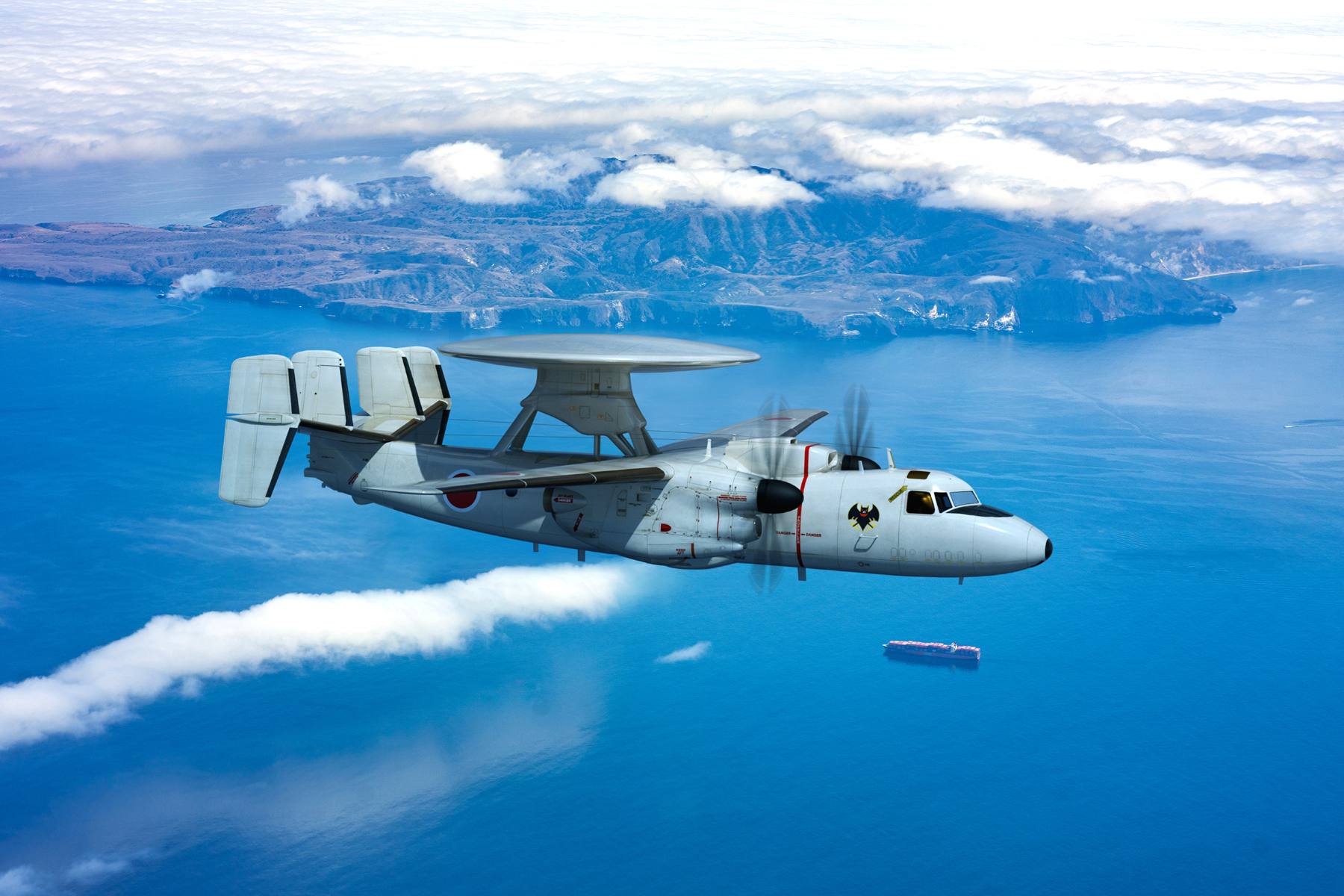
The Japan Air Self-Defense Force (JASDF) is currently introducing the E-2D Advanced Hawkeye as the successor to the E-2C Hawkeye. In light of Japan’s evolving security environment, how can the E-2D contribute to the defense of the nation, and how should it be employed to do so? Drawing upon the latest information provided by Northrop Grumman, this paper examines these questions, incorporating the author’s own perspectives.
From the standpoint of surveillance and command and control in the Pacific theater, the E-2D Advanced Hawkeye possesses the key attributes required to serve as a highly effective asset. Japan is expected to revise its National Security Strategy by the end of this year, and the importance of the Pacific domain will likely be further emphasized. In that sense, the E-2D aligns well with the strategic direction Japan is expected to take.
At the same time, the E-2D offers a high degree of compatibility with existing operational frameworks and systems, allowing Japan to leverage its current infrastructure without the need for major new integration efforts. This means that the time and financial burdens associated with personnel training and the establishment of maintenance infrastructure—both unavoidable when introducing a new aircraft type—can be reduced. Moreover, as a platform common to the U.S. Navy, it enjoys advantages in terms of capability upgrades and interoperability. The aircraft has also been designed to operate effectively in dense threat environments characterized by electronic warfare and cyber competition.
By capitalizing on these strengths, the E-2D can serve not only as a means of strengthening Japan’s national defense, but also as a tool for enhancing cooperation with allies and partners. In other words, its value extends well beyond a simple platform upgrade; it has the potential to play a broader role in shaping Japan’s future defense posture.
Expanding Airspace Coverage Toward the Pacific
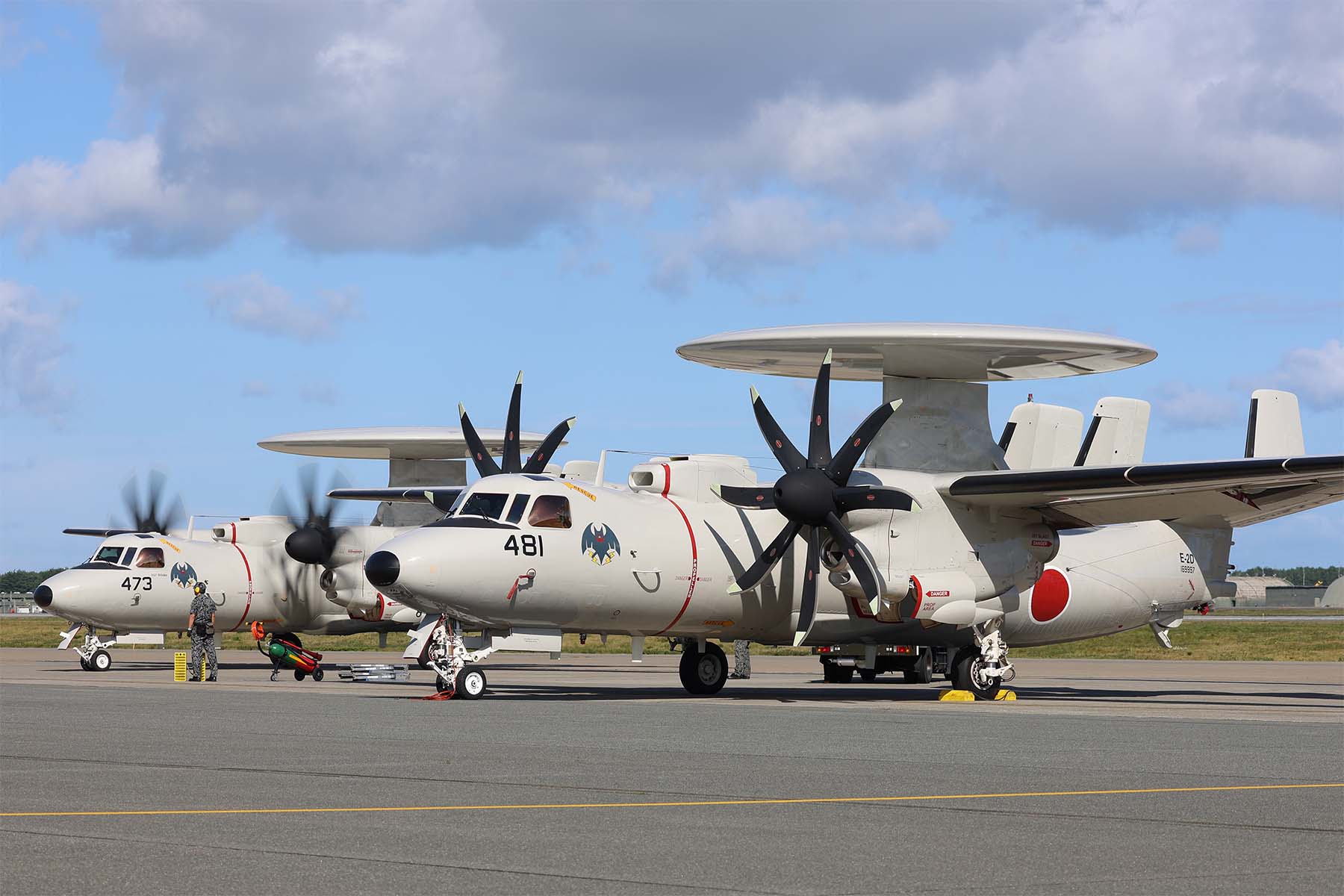
During the Cold War, when Japan’s primary concern was responding to airspace incursions in and around its own territory, it was sufficient to focus “northward,” keeping the Soviet Union—the principal threat—in mind. This context helps explain why the E-2C was deployed at Misawa Air Base. Later, as part of a “westward shift,” an E-2 squadron was also stationed at Naha Air Base, but even then operations remained within the confines of the Japanese archipelago.
However, the situation has changed significantly. As the Chinese Navy has expanded its capabilities, acquiring large surface combatants and aircraft carriers capable of operating at extended ranges, it has begun to conduct routine operations in the Pacific.
In fact, Japan’s current Three National Security Documents, formulated in 2022, already highlight the increase in China’s activities in the Pacific and the need to strengthen surveillance and monitoring capabilities in response. Since then, the situation has grown even more severe, with Chinese aircraft carriers now conducting flight operations in the Pacific.
In such an environment, Japan must extend its surveillance and monitoring coverage to the Pacific side. It must monitor not only the movements of naval vessels, but also those of aircraft.
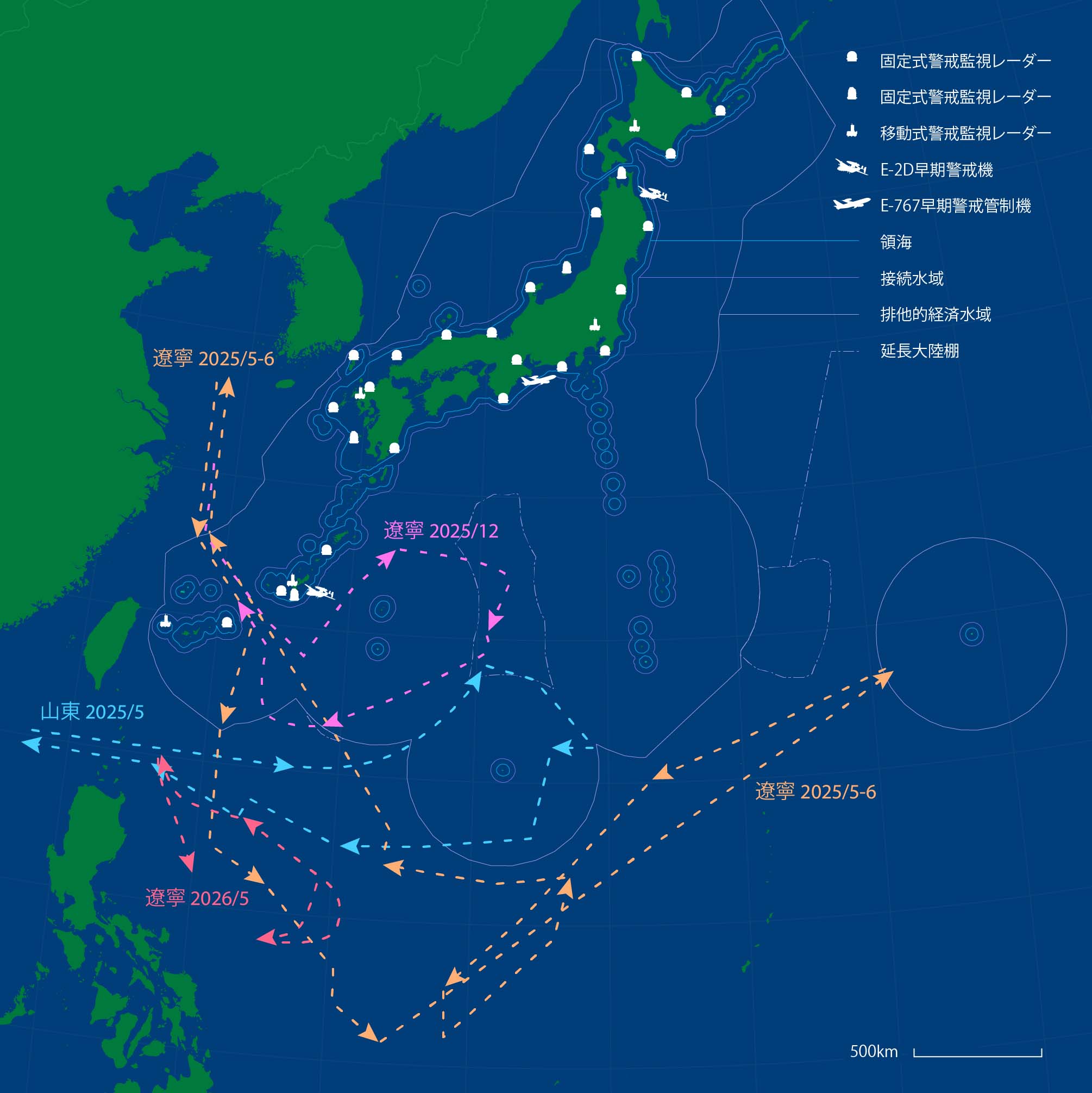
However, the Pacific side differs from mainland Japan and the Southwest Islands in that there is very little land, while the area requiring coverage is extraordinarily vast.
This scarcity of land places inherent limitations on ground-based surveillance. Indeed, the JASDF has no radar sites in the Ogasawara Islands area, meaning it lacks a means of continuously monitoring airspace from the ground in that region. Even if radar sites were established on remote islands, their coverage would be limited to a radius of several hundred kilometers, leaving significant gaps.
In this context, deploying airborne platforms such as the E-2D as needed is far more effective than relying solely on fixed ground-based radars. There are two primary reasons for this.
First, mounting radar on an aircraft allows it to operate at high altitude, extending its “field of view” beyond the horizon as seen from the ground or sea level. This enables earlier detection of incoming threats, particularly those flying at low altitude.
Second is mobility. Aircraft carrying radar systems can rapidly deploy and reposition, making it possible to send “eyes in the sky” wherever and whenever they are needed. This is especially effective when deploying wide-area surveillance capabilities across the Pacific, where usable land is scarce.
Moreover, the E-2D is not merely an airborne radar platform; it also functions as a “flying command post.” It can deploy both situational awareness and air battle management capabilities to a specific area, effectively providing a localized version of the JADGE (Japan Aerospace Defense Ground Environment) system. This allows it to support timely situational awareness and decision-making for integrated defense operations spanning land, sea, and air domains. In other words, it can deploy not only “eyes,” but also a “brain.”
Pillar One of the E-2D: High-Performance Radar
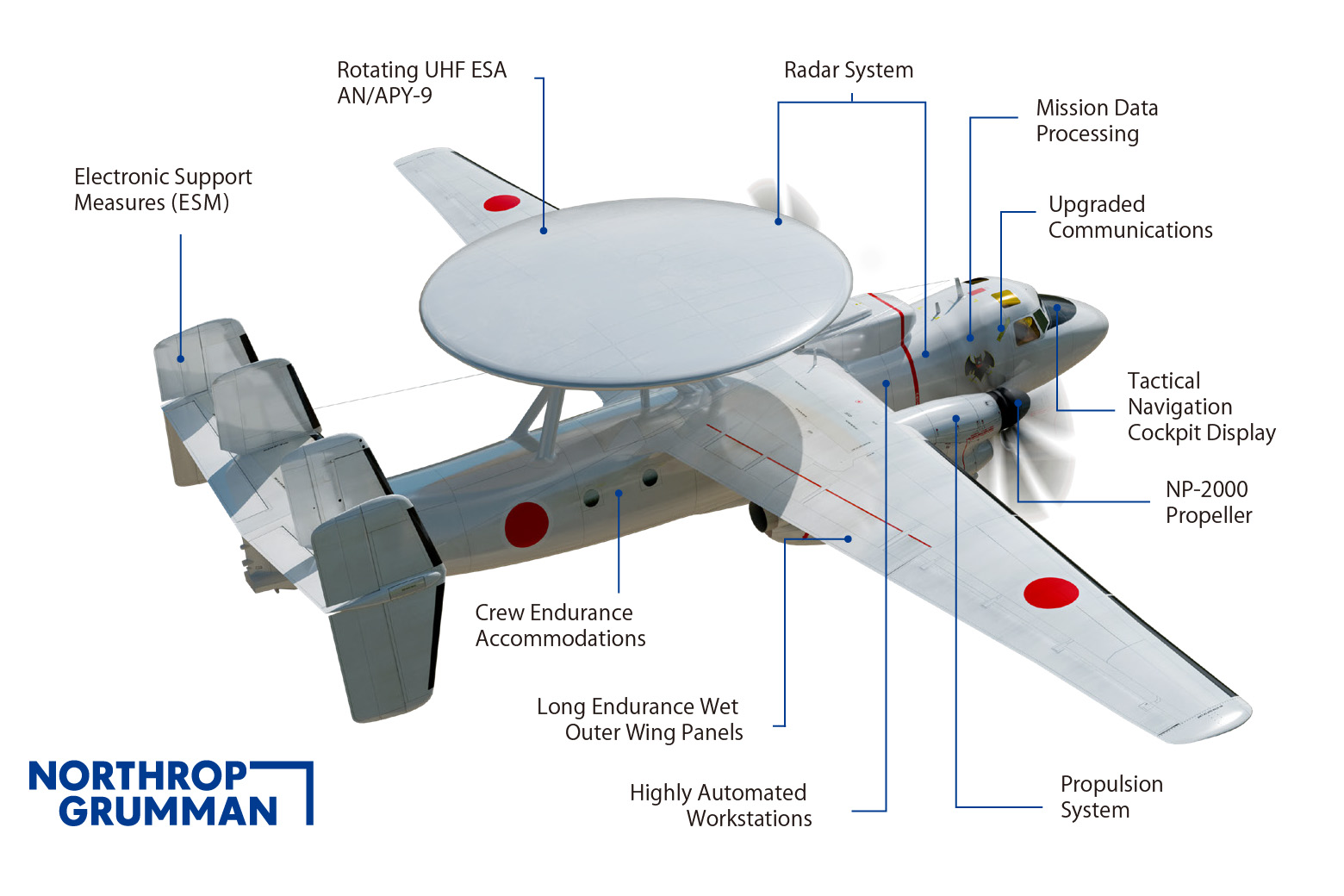
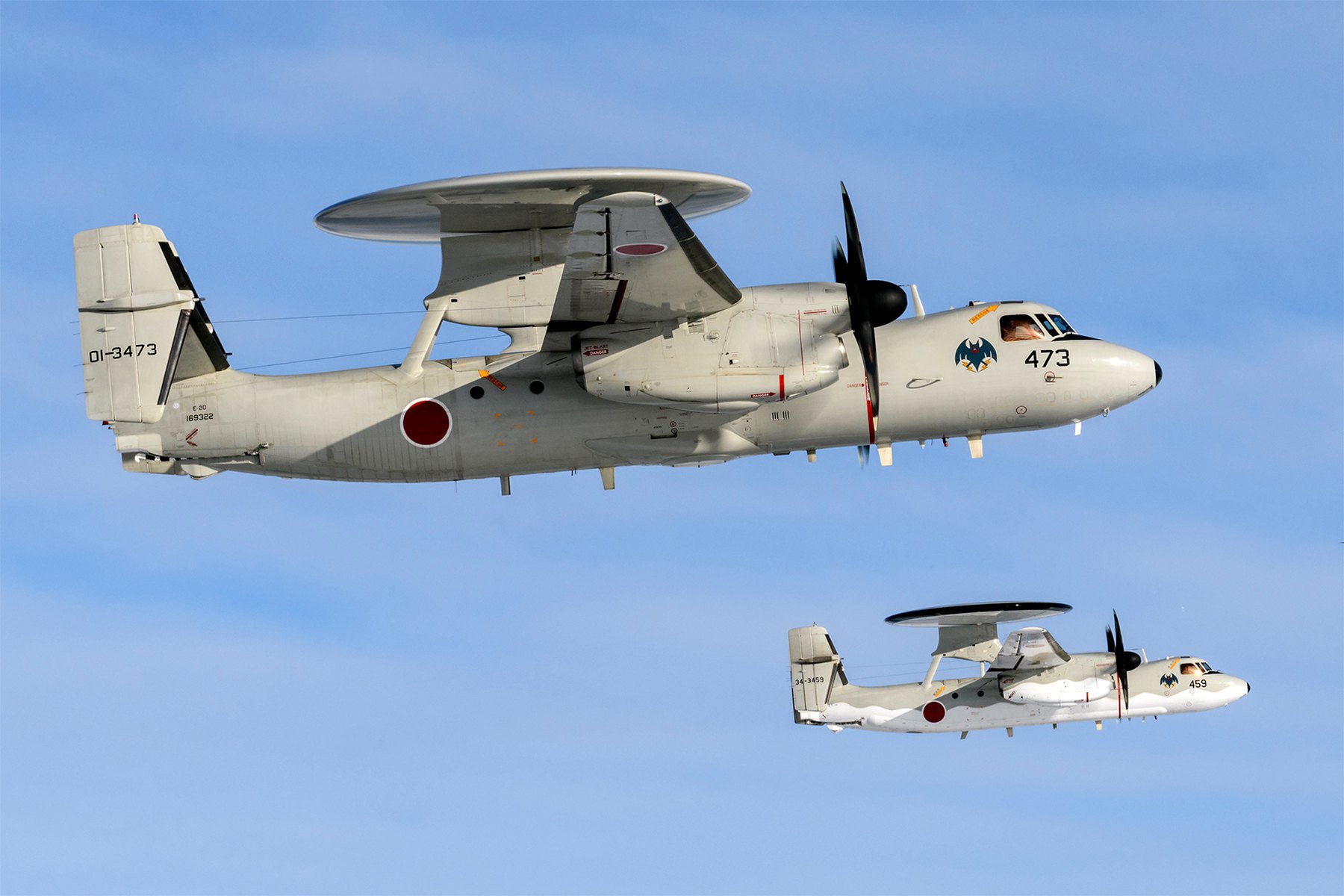
Although the E-2D appears similar to the E-2C externally, it is fundamentally a different aircraft internally. First and foremost, the E-2D has significantly enhanced the radar capabilities that form the core of its airborne early warning mission.
The E-2D is equipped with the AN/APY-9, an Active Electronically Scanned Array (AESA) radar. This transition to an array antenna enables the use of Space-Time Adaptive Processing (STAP), which utilizes two-dimensional data in both the time (pulse) and spatial (antenna) domains to suppress unwanted signals such as clutter and interference.
The E-2 was originally developed as a carrier-based early warning aircraft, and maritime surveillance has always been a key focus. In addition to detecting aircraft, it must also track low-flying anti-ship missiles flying just above the sea surface. Such anti-ship missiles and attack drones are inherently difficult to detect due to their small size. If the reflected signals from these targets become buried within sea-surface reflections, reliable tracking becomes extremely difficult.
Addressing this challenge—reducing the effects of sea clutter and improving detection capability—has long been a priority, and efforts to improve performance have continued over the years. STAP represents one of the latest advances in this effort.
In addition, the DSSC (Delta System/Software Configuration) Build 3 standard introduced a function known as the “dwell-based tracker.” In this context, “dwell” refers to a fixed period of time. Rather than scanning a given airspace instantaneously, the radar continuously observes a specific area for a sustained interval, integrating multiple reflected signals obtained during that period. This enables the aircraft to more reliably detect and track intermittent or weak targets that would be difficult to identify through a single pulse transmission alone.
Conventional radars perform full-circle scans and establish tracks by linking detections obtained from successive sweeps. However, because the AN/APY-9 is an AESA radar capable of electronically steering its beam, it can continuously focus on a specific sector or target and maintain uninterrupted reception of reflected signals.
This capability is likely to be particularly effective against stealth targets. After all, the essence of stealth technology lies in preventing a target from appearing clearly and continuously on radar, thereby complicating detection and tracking.
With this advanced radar, the E-2D can simultaneously detect and track thousands of airborne and maritime targets, including drones and missile threats. Furthermore, by improving the radar’s search, detection, and tracking functions, the workload placed on onboard controllers to interpret radar information is reduced. This allows them to focus more fully on command and control tasks, contributing to more effective battle management.
Pillar Two of the E-2D: Battle Management
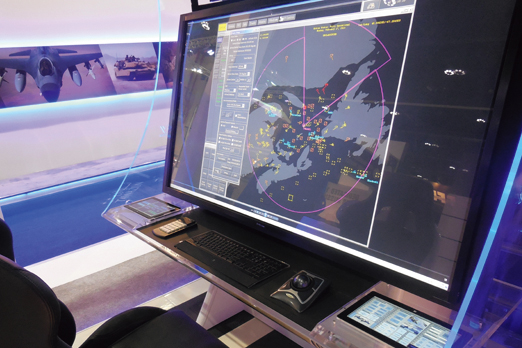
Equally important is the E-2D’s control capability. It is not simply an airborne early warning (AEW) platform, but an airborne early warning and control (AEW&C) system, capable of performing command and control functions.
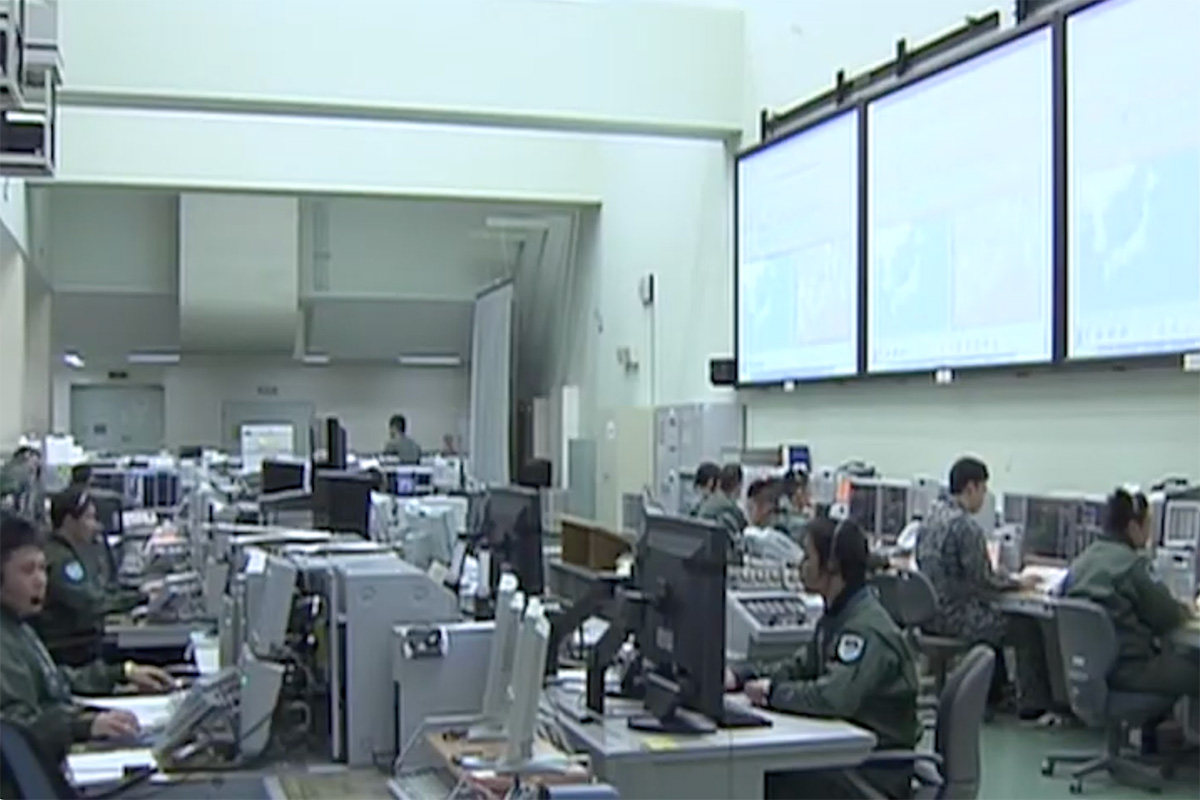
The onboard displays of the E-2D are said to provide the same level of situational awareness as those in JADGE air defense command centers. Based on this information, the aircraft is equipped to perform functions equivalent to those of intercept controllers on the ground.
In addition, by integrating data obtained from multiple domains, the E-2D can generate a real-time common operational picture and share it among allied nations. This is an indispensable element for achieving rapid situational awareness and decision-making.
In modern warfare—particularly in the field of air combat—not only situational awareness but also rapid decision-making based upon it is regarded as essential. In other words, superiority in command and control and superiority in decision-making are critical. The key is to understand the situation faster than the adversary, make decisions faster, and act first. The E-2D provides the foundation for achieving this advantage.
Furthermore, dispersing and networking military assets rather than concentrating them in a single location increases survivability while complicating the enemy’s targeting problem. Combined with superiority in command and control and decision-making, this forms the core concept behind the U.S. military’s Joint All-Domain Command and Control (JADC2) initiative.
Under this framework, the U.S. Navy is pursuing the operational concept known as Distributed Maritime Operations (DMO). The E-2D is one of the key enablers supporting this vision.
In effect, the E-2D serves not only to detect and track threats encountered over maritime areas, but also to act as the central node for directing operations in both peacetime and wartime. This is what is commonly referred to as “battle management.” Such capabilities contribute directly to the execution of maritime operations and to preserving freedom of navigation and maritime access.
Even in peacetime, these situational awareness and command-and-control functions can support missions such as border security, intelligence collection, and disaster response.
Enhanced Command and Control Capabilities and Information Sharing Through Data Links
The E-2D retains the same five-person crew as the E-2C: pilot, co-pilot, and three controllers in the rear cabin. In the U.S. Navy, these positions correspond respectively to the Radar Operator (RO) and Weapons System Officer (WSO), the Combat Information Center Officer (CICO), and the Air Control Officer (ACO), though these designations are not used in Japan.
Additionally, the E-2D introduces a 17-inch display at the co-pilot’s station, allowing the co-pilot to assist in control tasks as needed. In practical terms, this is equivalent to adding another controller, making it easier to avoid saturation of the crew’s processing capacity.
Network capabilities have also been enhanced. Like the E-2C, the E-2D supports Link 16 tactical data links, enabling the sharing of radar-derived tracking information with aircraft and ships. Moreover, because Link 16 is a common tactical data link used throughout the Western alliance, it contributes significantly to joint and multinational operations.
In addition, the E-2D’s mission systems are capable of controlling unmanned systems. This opens the possibility of integrating both manned and unmanned aircraft under the centralized control of the E-2D. If fully realized, the E-2D could become a core node for MUM-T (Manned and Unmanned Teaming) operations.
Deployment and Operational Considerations
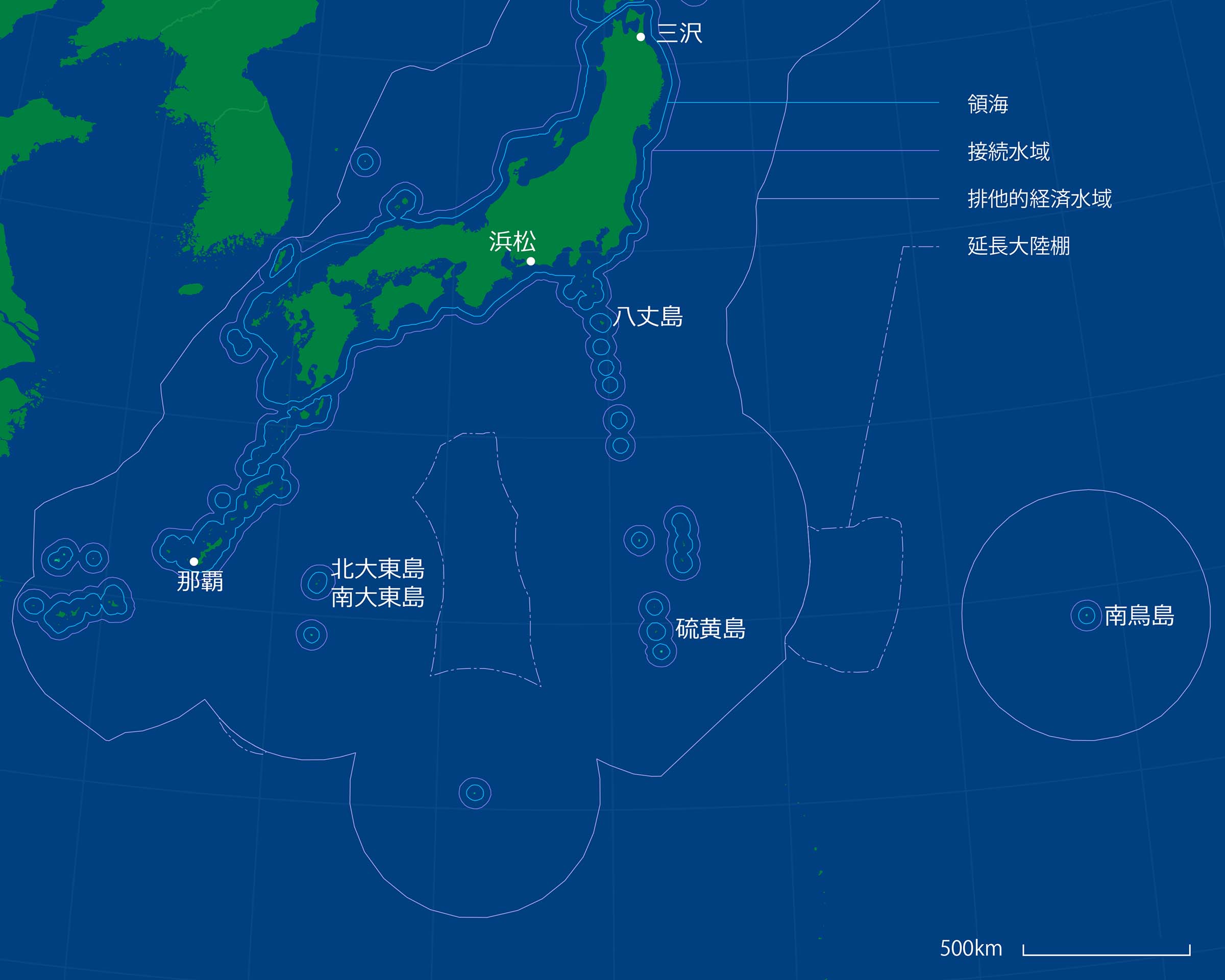
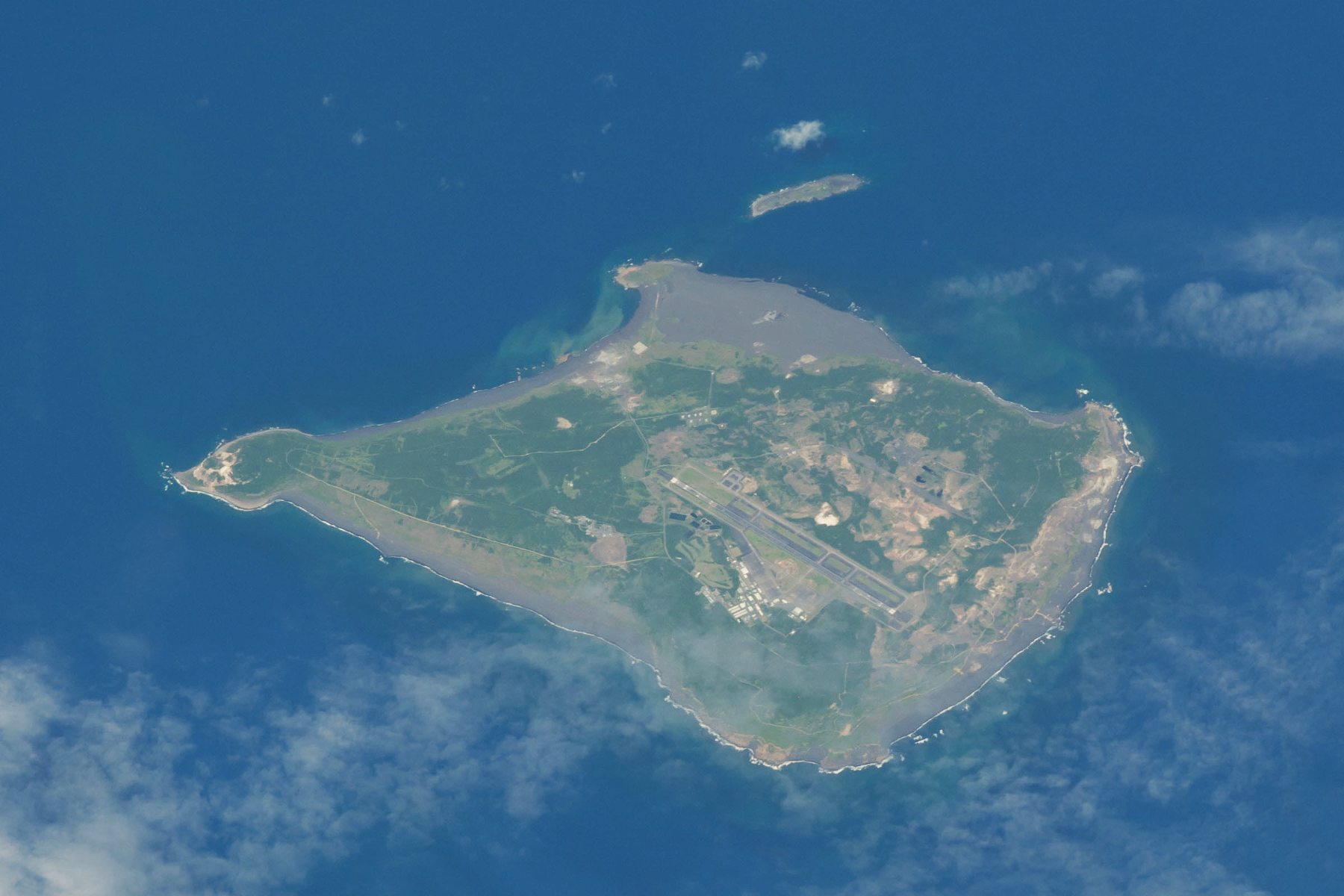
These capabilities also raise questions regarding optimal deployment and operational posture. At present, E-2 units are based at Misawa (north-oriented) and Naha (west-oriented). However, when considering operations in areas such as Iwo Jima, both locations present significant distance challenges—approximately 1,800 km from Misawa.
One potential approach would be to designate Hamamatsu Air Base—currently home to the E-767—as a Main Operating Base (MOB) for airborne early warning assets, including the E-2D, and deploy them forward to Forward Operating Bases (FOBs) as needed.
The distance from Hamamatsu to Iwo Jima is under 1,200 km, reducing transit time to roughly two-thirds compared to deployment from Misawa. Shorter transit times mean fewer aircraft are required to maintain continuous on-station coverage, resulting in more efficient operations.
This approach is not limited to Iwo Jima. Any island with a suitable airfield could potentially serve as an FOB. Because the E-2D was designed for carrier operations, it can operate from shorter runways and those with lower load-bearing capacity than large AWACS aircraft, expanding the range of available operating locations.
Extended Endurance and Improved Habitability
Although the E-2D may be perceived as a small aircraft with limited range due to its carrier-based design, this is not the case. JASDF variants feature a “wet wing” configuration with additional fuel tanks installed within the wings, enabling missions of up to eight hours. (The U.S. Navy, by contrast, addresses endurance requirements by equipping the aircraft with an aerial refueling probe mounted on the nose.)
The ability to remain airborne for extended periods is indispensable for maintaining persistent on-station coverage across the Pacific, where operational areas are vast and available airfields are limited. It allows the aircraft both to operate farther from base and to remain over operational areas for longer periods of time.
Another area improved through operational feedback is habitability. While the aircraft’s physical size remains unchanged, meaning the cabin itself is not larger, the addition of amenities such as a lavatory and microwave oven represents a meaningful enhancement for crews conducting long-duration missions.
Future Potential of the E-2D
Beyond the points discussed above, another important factor is the accumulated experience of the JASDF. Having operated the E-2C for many years, Japan already possesses a substantial foundation in infrastructure, training, maintenance, and operational know-how. The E-2D allows the JASDF to build directly upon this accumulated expertise.
Furthermore, as a platform common to the U.S. Navy, the E-2D will continue to benefit from ongoing capability upgrades in areas such as radar, communications, and command and control. International users of the E-2D can leverage these developments to enhance their own capabilities. Like many modern weapon systems, the E-2D’s mission systems are designed according to an open-architecture philosophy, making it easier to integrate new functions and rapidly expand capabilities.
Northrop Grumman has also emphasized that the program is “built upon decades of cooperative development and mutual trust” and reflects “an ongoing partnership and shared commitment with Japan’s defense industry.” This contributes to confidence not only in future capability sustainment and upgrades, but also in ensuring reliable maintenance and long-term support within Japan.
Ranking読まれている記事
- 24時間
- 1週間
- 1ヶ月
- 防衛省、管理職隊員の再就職状況を公表 令和8年4~6月分(10月2日)
- 防衛省、管理職隊員の再就職状況を公表 令和7年度の計184件(10月2日)
- 川崎重工、低NOx水素燃焼器を搭載した航空エンジンの運転試験に日本初成功(10月8日)
- 防衛省関係者966名が受章 第47回危険業務従事者叙勲(令和8年10月10日)
- 航空自衛隊がブルーインパルスの2026年度展示飛行スケジュールを更新(5月25日)
- 三菱重工、下関市の人工島「長州出島」の用地を取得 三菱造船の建造能力拡大へ(10月2日)
- 人事発令 令和8年8月1日・2日・3日付け、1佐職人事(陸自241名、海自20名、空自56名)
- 防衛省が第13回処遇・給与部会を開催 自衛官の給与体系見直し提言取りまとめ(8月24日)、議事録を公開(9月10日)
- 退職自衛官の再就職状況 令和7年度の就職援助の実施結果を公表(9月29日)
- 人事発令 令和8年10月1日付け、1佐職人事(陸自7名、海自2名、空自5名)
- 人事発令 令和8年10月5日付け、1佐職人事(海自3名)
- 防衛省、管理職隊員の再就職状況を公表 令和8年4~6月分(10月2日)
- 航空自衛隊がブルーインパルスの2026年度展示飛行スケジュールを更新(5月25日)
- 退職自衛官の再就職状況 令和7年度の就職援助の実施結果を公表(9月29日)
- 森田空幕長が記者会見 グローバルホーク回収、F-15事故、GCAPに言及(9月29日)
- 人事発令 令和8年10月1日付け、1佐職人事(陸自7名、海自2名、空自5名)
- 防衛省、管理職隊員の再就職状況を公表 令和7年度の計184件(10月2日)
- 人事発令 令和8年8月1日・2日・3日付け、1佐職人事(陸自241名、海自20名、空自56名)
- 川崎重工、低NOx水素燃焼器を搭載した航空エンジンの運転試験に日本初成功(10月8日)
- 防衛省関係者966名が受章 第47回危険業務従事者叙勲(令和8年10月10日)
- 《特集》ブルーインパルスが愛知の空へ!「愛知・名古屋2026大会」どこで見る? どこで撮る?
- 航空自衛隊がブルーインパルスの2026年度展示飛行スケジュールを更新(5月25日)
- 最新レーダーの驚くべき生産拠点 ──最高の製品は最高の工場から
- 人事発令 令和8年9月18日付け、1佐職人事(海自1名)
- 人事発令 令和8年10月5日付け、1佐職人事(海自3名)
- 人事発令 令和8年8月1日・2日・3日付け、1佐職人事(陸自241名、海自20名、空自56名)
- 防衛省が第13回処遇・給与部会を開催 自衛官の給与体系見直し提言取りまとめ(8月24日)、議事録を公開(9月10日)
- 森田空幕長が記者会見 グローバルホーク回収、F-15事故、GCAPに言及(9月29日)
- 防衛省、管理職隊員の再就職状況を公表 令和8年4~6月分(10月2日)
- 退職自衛官の再就職状況 令和7年度の就職援助の実施結果を公表(9月29日)